Prices, hours and rules checked against the official pages of the Bavarian Palace Administration and the Ticket Center Hohenschwangau. The booking page always has the final word.
Neuschwanstein Castle is not a medieval castle but a nineteenth-century king's dream of the Middle Ages. Ludwig II of Bavaria laid its foundation stone in 1869 on the ruins of a fortress he had known since childhood, and moved into the still unfinished rooms seventeen years later, a few months before his death. What visitors see today is a stage set: a throne hall with no throne, a knight's castle that was never besieged, and technology far ahead of its time.
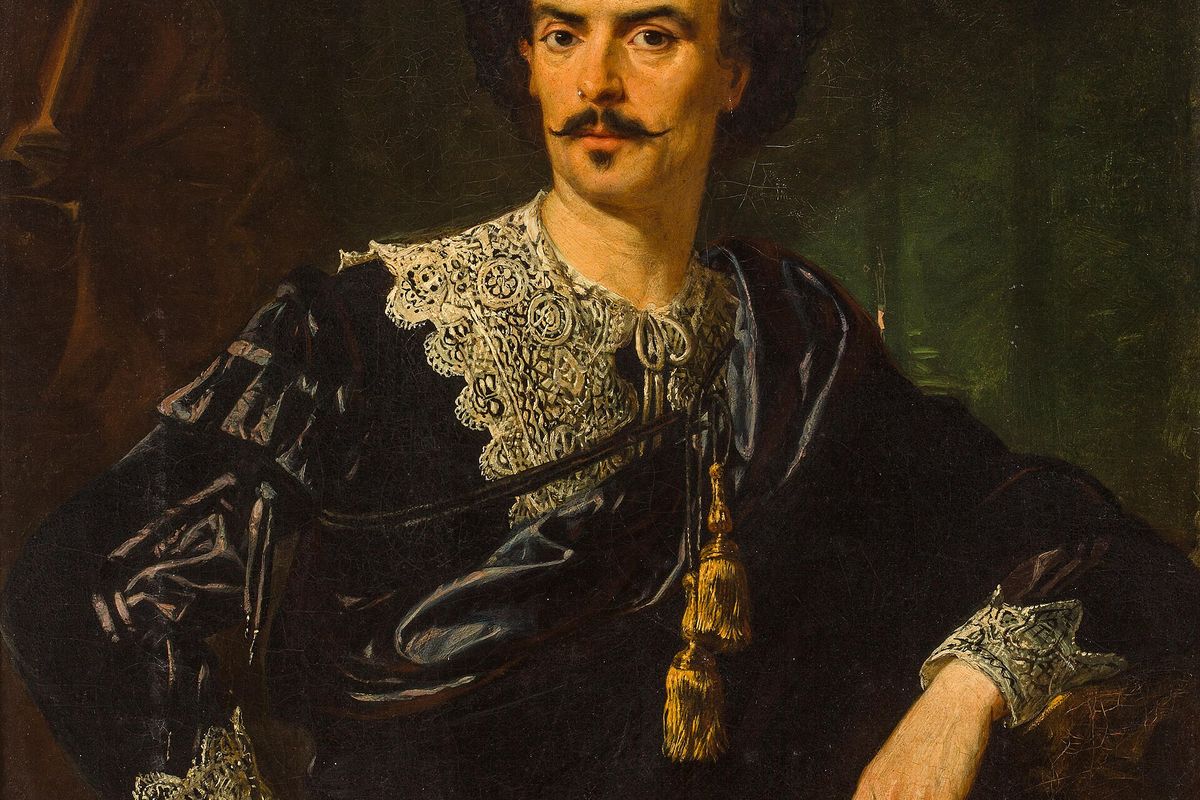
A king, a composer and two ruins
Ludwig became king in 1864 at the age of eighteen, and his political power evaporated after the Austro-Prussian war two years later. What remained were money and imagination. He had grown up in Hohenschwangau Castle across the valley, whose walls are painted with the legend of Lohengrin, the swan knight; at fifteen he saw Wagner's opera for the first time and became the composer's greatest patron. The site of the new castle was given by two ruins above the Pöllat gorge, Vorder- and Hinterhohenschwangau. The designs were drawn not by an architect but by Christian Jank, a theatre set designer; the architects Eduard Riedel and Georg von Dollmann turned them into stone.
Building the castle: 1869-1892
The foundation stone was laid on 5 September 1869. The gatehouse was finished first and Ludwig watched the works from it; the palace building stood by 1880 and in 1884 the king moved into rooms that still smelt of paint. Two hundred and sometimes three hundred people worked on the site, and Bavaria watched with a mixture of pride and alarm at the cost. When Ludwig died, barely fifteen of the more than two hundred planned rooms were finished; the 90-metre keep intended for the middle of the courtyard, the chapel and the hanging garden were never built. Work stopped in 1892, and the square tower was completed in a simplified form.
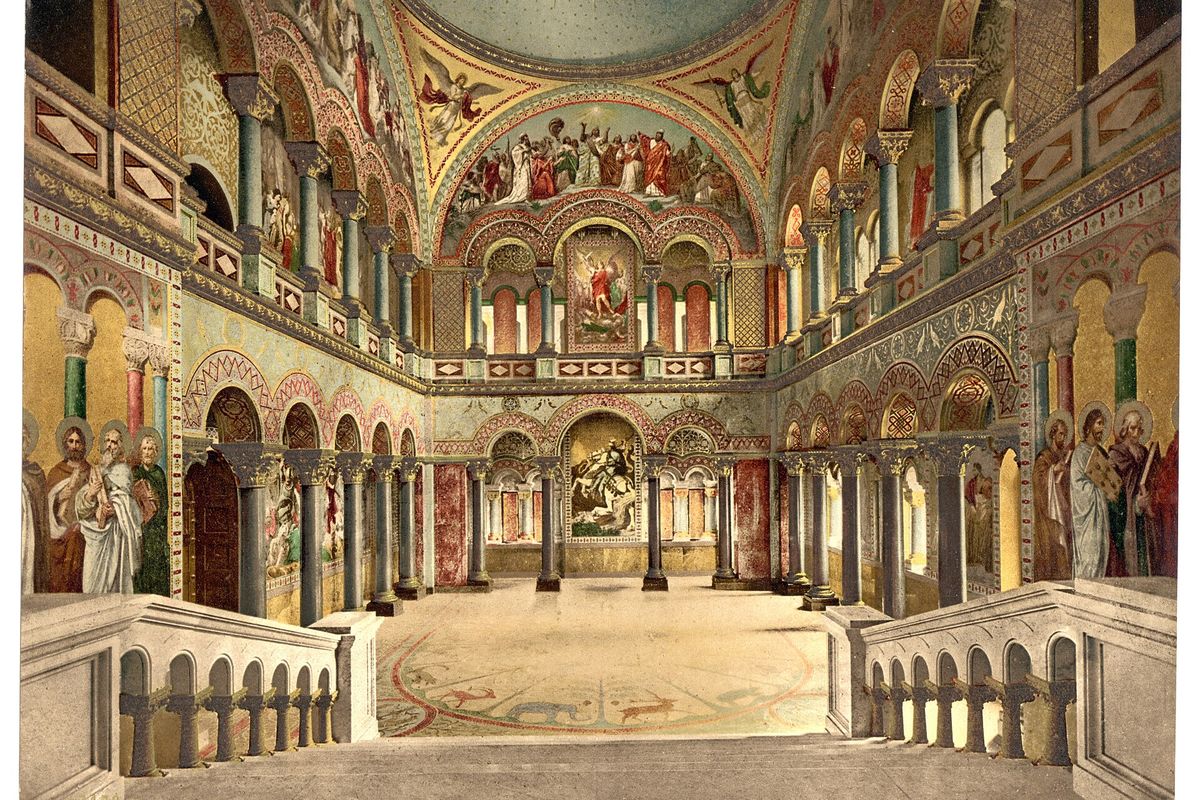
The dream from the inside
The two-storey Throne Hall is a Byzantine basilica: a mosaic floor of two million stones, a gilded apse with six canonised kings and a four-ton chandelier in the shape of a crown. The throne of gold and ivory was never made. On the top floor the Singers' Hall echoes the festival hall of the Wartburg and tells the legend of Parsifal; no concert was held there in the king's lifetime, the first came in 1933. Behind the romance stands a technically modern house: hot-air central heating, pressurised running water on every floor from a spring 200 metres higher up, automatic flushing toilets, a telephone, electric bells, and a kitchen spit turned by the heat of the fire. Visitors have been paying to see it since 1886: the king's debts were cleared from the ticket income by 1899.
The name, Disney and UNESCO
Ludwig called it "Neue Burg Hohenschwangau"; Neuschwanstein, "new swan stone", is the name it was given after his death. During the Second World War the castle stored art looted from France by the Nazis, cleared by the Monuments Men in 1945. In 1955 Walt Disney took the silhouette as the model for the Sleeping Beauty Castle at Disneyland, and with that Neuschwanstein became the most recognisable castle outline in the world. On 12 July 2025 the UNESCO World Heritage Committee inscribed it as part of "The Palaces of King Ludwig II of Bavaria", together with Linderhof, Herrenchiemsee and the King's House on Schachen.
Ludwig II in seven dates
| Year | Event |
|---|---|
| 1845 | born on 25 August at Nymphenburg Palace in Munich |
| 1864 | becomes king at eighteen; writes his first letters to Wagner |
| 1869 | foundation stone of Neuschwanstein laid on 5 September |
| 1878 | Linderhof completed, the only one of his palaces ever finished |
| 1884 | moves into the palace building at Neuschwanstein |
| 1886 | declared unfit to rule on 9 June, found dead in Lake Starnberg on 13 June; the castle opens to visitors on 1 August |
| 2025 | the palaces become a UNESCO World Heritage Site on 12 July |
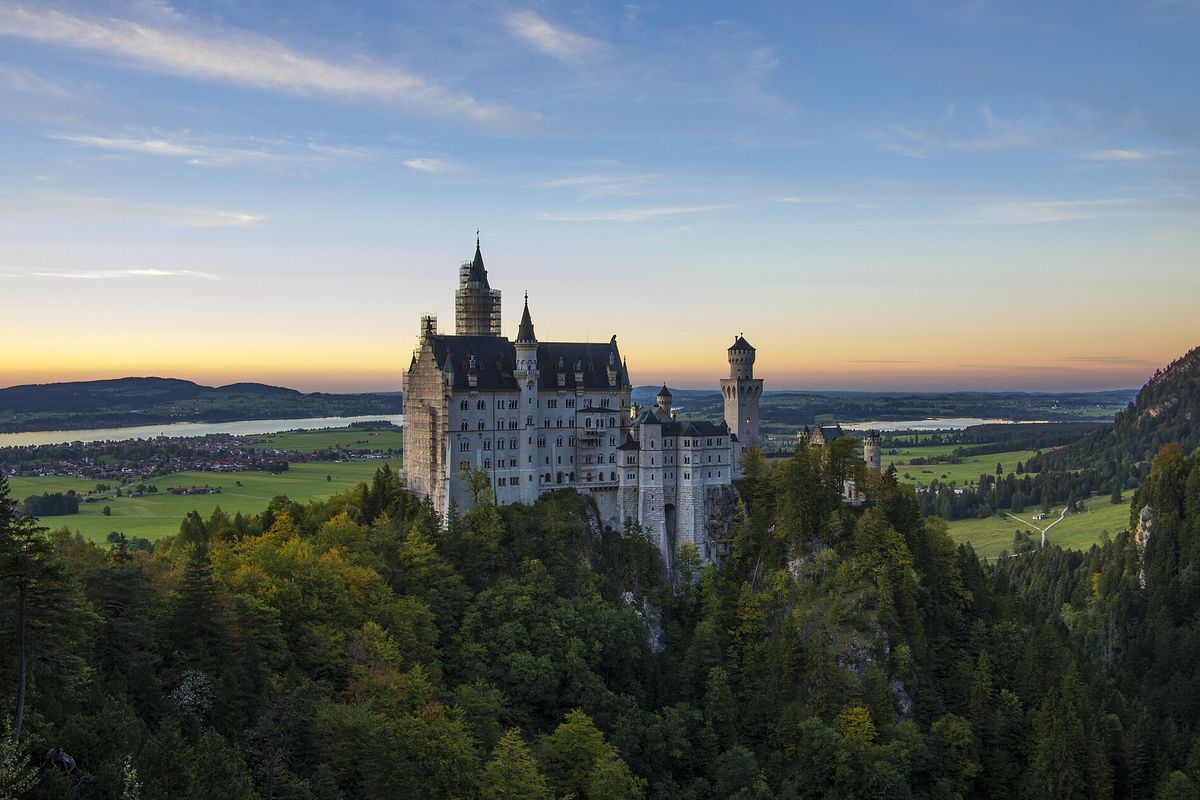
The other Ludwig castles, and how to see them
Neuschwanstein is one of four sites in the UNESCO listing, and the only one you cannot see properly in a morning. Linderhof, 45 km east near Oberammergau, is the small rococo palace Ludwig actually lived in, with its Venus grotto and park; most coach tours from Munich pair it with Neuschwanstein. Herrenchiemsee, his Versailles on an island in the Chiemsee lake, lies on the other side of Munich and needs its own day. The King's House on Schachen is a mountain hut with a Turkish hall at 1,866 metres above Garmisch, reached only on foot. Hohenschwangau, across the valley, is not in the listing but is where the story begins.
Frequently asked questions about the history
Who built Neuschwanstein Castle?
King Ludwig II of Bavaria commissioned it in 1869; the set designer Christian Jank drew the visual designs and the architects Eduard Riedel and Georg von Dollmann built it.
Was the castle ever finished?
No. When Ludwig died in 1886 barely fifteen rooms were complete; the keep and the chapel were never built. Work stopped in 1892.
Did the king live in the castle?
For about 172 days in total, mainly between 1884 and 1886, largely alone and keeping nocturnal hours.
Why is it called the Disney castle?
Walt Disney used the silhouette of Neuschwanstein as the model for the Sleeping Beauty Castle at Disneyland in 1955, and the two images have been linked ever since.
When did Neuschwanstein become a World Heritage Site?
On 12 July 2025, as part of 'The Palaces of King Ludwig II of Bavaria', together with Linderhof, Herrenchiemsee and the King's House on Schachen.
How did Ludwig II die?
He was found dead in Lake Starnberg on 13 June 1886 together with his doctor, a day after being deposed; the circumstances have never been fully explained.
See the rooms for yourself
The guided tour passes through the Throne Hall, the Singers' Hall and the royal apartments: reserve your slot before you travel.
Tickets and tours